Fraying Values - the world of early 2026
Dr Tony Power
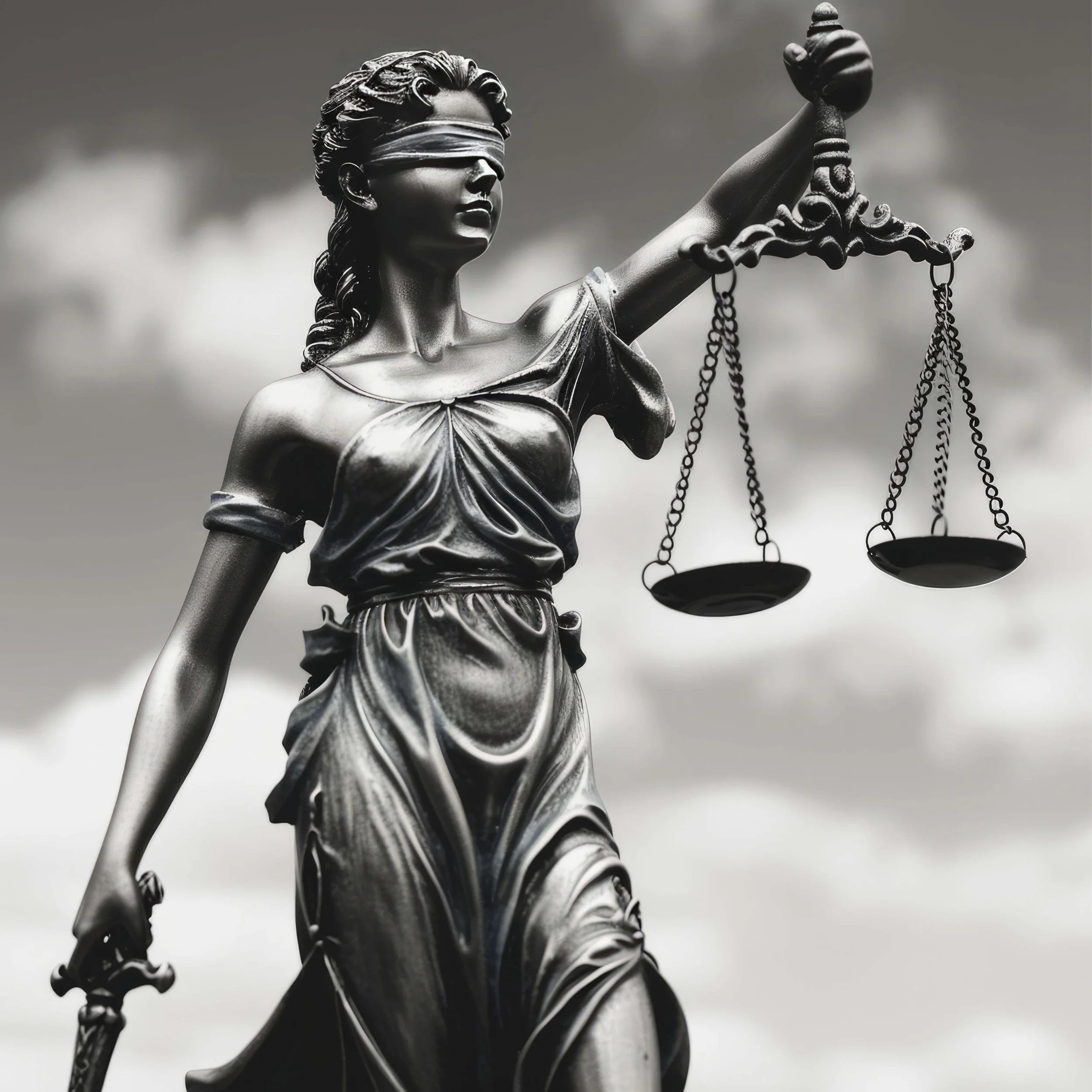
In these opening days of 2026, I find myself deeply concerned that we're allowing our values of justice, fairness, and mercy to slip away in our public affairs. History shows that when these values erode at the international and national level, they rarely stop there. They seep into institutions, organisations, and workplaces. This is about how power behaves when unchecked, including in organisations.
The examples used in this post are largely American because they are foremost in my mind at the time of writing. Trump and his administration in particular, have a way of dominating the headlines, whether for good or ill. That said, it is a disturbing trend I am seeing occur in other countries, both in the international and domestic spheres. The growing authoritarianism in Hungary under Orbán, Hindu nationalism in India under Modi, and the Russian invasion of Ukraine, just to name a few.
So far in 2026, we have seen the administration of Trump seize the Venezuelan president Nicolás Maduro in blatant violation of international law, and possibly US law too. Now, Maduro was not a good guy, to put it mildly, I'm not unhappy to see him go. But the Trump administration's attitude to international law, "it basically doesn't exist, we're strong, and we can do what we like," is deeply troubling to me. Officials in Caracas reported that at least 24 Venezuelan security officers were killed in the US military operation to capture the now deposed president. I'm not sure if that figure is accurate, but it effectively illustrates the stakes involved in such actions. Do we want them decided on a "might makes right" basis? The idea that the United Nations might have a role to play in resolving the Venezuelan situation was treated with disdain.
Following this up, we have the US Government making threats to seize Greenland, the sovereign territory of Denmark, a NATO ally. They have refused to rule out the use of force to bring this about, but they hope to be able to just "buy it". Sounds like rank extortion to me. The fact that an overwhelming majority of Greenlanders do not wish to join the United States, "well, they're only around 55,000 people", presumably this means they don't count, no self-determination for them. The West rightly condemned the Russian invasion of Ukraine as a heinous breach of international law without any reasonable justification, inflicting needless suffering and slaughter on Ukraine's population. Putin's excuses for this unprovoked aggression were laughable. It's heartbreaking to see those same types of excuses echoed by Trump with respect to Greenland.
After the Second World War, we developed what came to be known as the rules-based order. International frameworks of rules for conducting global trade, such as the General Agreement on Tariffs and Trade (GATT), and international relations, such as through the United Nations Charter. This rules-based order wasn't perfect, was often overly influenced by the powerful countries, and was in some areas honoured more in the breach than in the observance. This was a tension going right back to the Nuremberg trials of former Nazi leaders after the war. The Allies wanted to establish that state sovereignty existed only so far. Certain actions constituted crimes against humanity as a whole, and the international community could and should step in to bring justice. The presence of the Soviet Union as a party to the trial was an uncomfortable realpolitik influence on the proceedings, given the Stalinist regime's own atrocities, many of which were very similar to those carried out by the Nazi defendants themselves.
Nevertheless, despite the imperfections and uncomfortable compromises, the Nuremberg trials were an important step in establishing that even world leaders should be bound by the law. The law should act to protect and bring justice for the vulnerable, and extend the protections of procedural fairness* for those accused (*due process for our American friends). Similarly, while compromised and imperfect, the rules-based order has helped to keep global peace and build prosperity over the past 70+ years. There were still conflicts, still poverty, still injustices, but I'd argue most would agree that it was, on balance, a better system than the "might is right" approach which had dominated global politics in the preceding centuries. I fear however, that we are now backsliding into a might-is-right world. The powerful may do what they will, and the weak will suffer what they must.
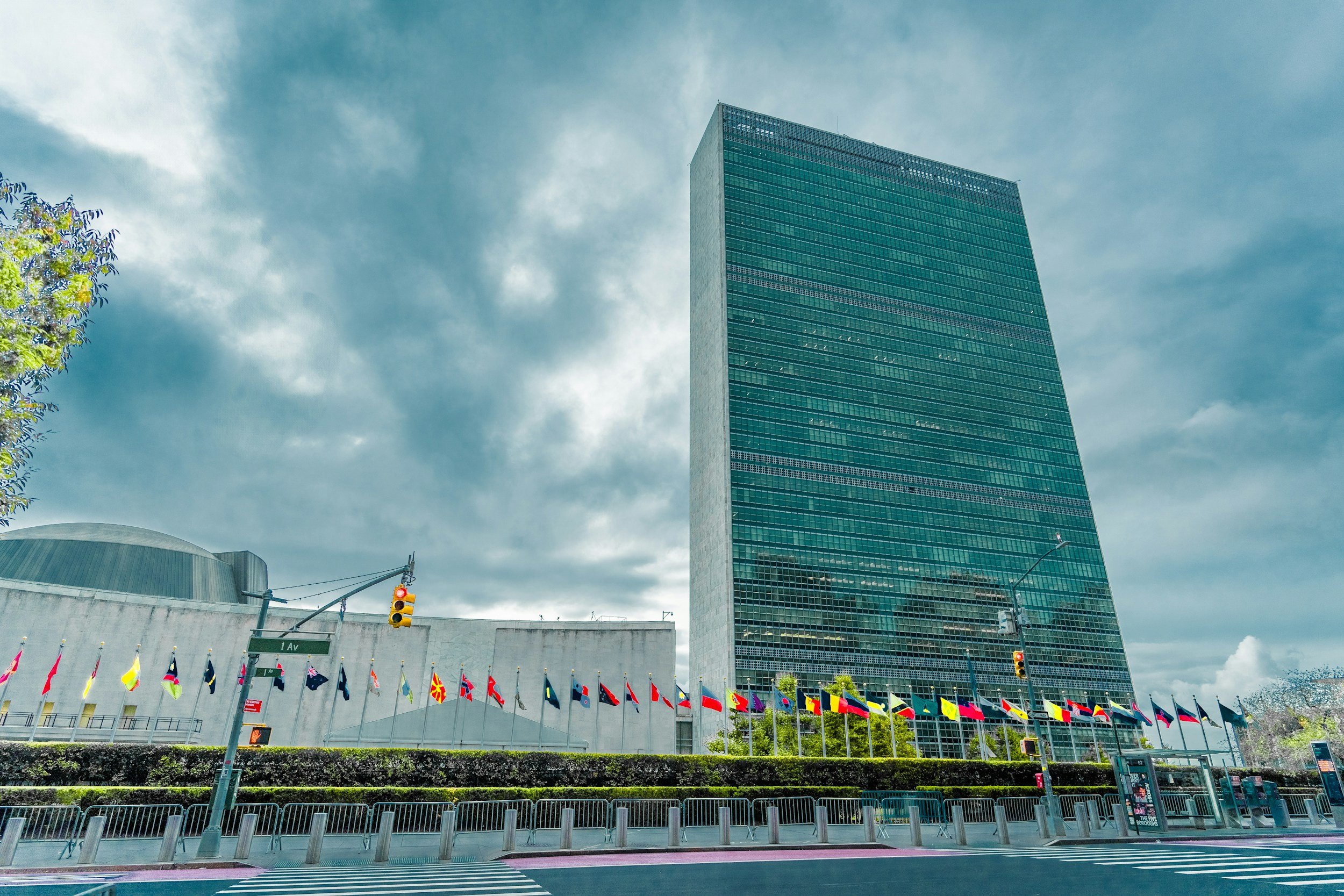
For every piece of commentary I see denouncing this slide towards international lawlessness, I see another saying, well, international law never really existed anyway, because it was always about the rights of the strong. While I can't deny that the strong sometimes, often even, abused their position, the aspiration, the ideal, the rhetoric, the need to at least try to justify behaviour according to international law, these things mattered. It did act to constrain the worst impulses of nations, even if imperfectly.
This denigration of the values of justice, of fairness and mercy in the international sphere, in turn, cannot help but seep into the domestic sphere, particularly in the United States, but across the west. When combined with increasing polarisation, fuelled in part by social media algorithms designed to draw attention by inflaming passions, you get a world where justice is no longer even perceived as trying to be objective. If someone on "our team" is accused of breaking the law, it doesn't matter the circumstances, it was justifiable, and they are innocent. If someone on the "other team" is accused, they are guilty, they deserve everything they get, and we can do anything, break any law ourselves, in order to punish them.
A couple days ago, we had the fatal shooting of a US citizen in her car by an ICE agent. Despite video footage of the incident from several angles, you get polar opposite interpretations of what happened. Watch MSNBC, and it was a cold-blooded murder of a fleeing woman. Watch Fox News, and it was a lesbian with pronouns in her bio who was attempting to run over an ICE officer and basically had it coming. (Based on my viewing of the footage, I can't see how the use of deadly force was justified.) At this stage, the chances of the Trump administration instituting an independent, fair inquiry into the event seeking truth, however imperfectly, looks remote. Indeed, they appear to be actively obstructing any such efforts. The pursuit of justice would be politically inconvenient. This ICE agent was on "our team"; therefore, his actions were justified, full stop, the end.
This perverse attitude by leaders to the rule of law, to values of justice, fairness and mercy infects and distorts the rest of society. To some, this may seem like a strength; it may seem advantageous to use your power to dominate others, but this is an illusion. It is a sign of weakness, of fear, and ultimately, it always proves self-destructive in the end. My great worry is that its superficial attractiveness will spill over into our institutions and organisations. That they will become less just, less fair, less merciful. That such values will simply be seen as weapons to be wielded arbitrarily by the powerful.
Out of the universal human values, ones that have always resonated very deeply with me are justice, fairness and mercy. It's a big part of why I do the work that I do, helping organisations create fairer and more just workplaces for their people, to the benefit of both. I truly believe and have seen the difference that treating people justly and fairly makes in an organisation. People are more productive, more creative, and engaged, all of which enrich the organisation and help it achieve its purpose. Quite frankly, it is the right thing to do, both ethically and in a business sense.
A vital foundation in establishing justice and fairness is rules. Rules that are in themselves fair and just. Rules that are applied justly and fairly. Rules that bind and protect everyone in the organisation, from the CEO to the temp office clerk. Rules that establish procedural fairness. Procedural fairness can often be overlooked or discounted, but it is vitally important. It ensures decisions are only based on information that is relevant, reliable, and fairly obtained. It recognises that in order to achieve fair outcomes, the process needs to be fair. When rules become merely a tool of the powerful, instead of foundations of justice, fairness and mercy, it is most often through removal of procedural fairness. "We know this guy is a troublemaker, so we'll make sure the process ends in termination." "This is our top salesperson; we need to make sure the sexual harassment complaint against them reaches the right outcome."
The rules and standards still exist and are nominally "fair", but their interpretation, their application, and their enforcement become arbitrary, capricious, and unjust. The result is a toxic organisation where the best people leave, because they have options. The rest remain, either because they know they cannot find work elsewhere, or because outside obligations such as mortgages or caring responsibilities makes staying the lesser of two evils compared to the disruption and risk of changing jobs.
We will never achieve perfect systems of justice. It will always be an ideal to aspire to. But we should never allow the perfect to become the enemy of the good. Better to build institutions and organisations that are as just, fair, and merciful as they can reasonably be, than to give up on the effort or, even worse, turn them into weapons. It is when values are under threat that they must be defended by those who still hold them. In an increasingly unjust world, we can still create just and fair spaces in organisations. That work is slower, harder, and less glamorous than wielding power. But it is how trust survives downturns, how organisations retain their best people, and how values endure when conditions are hostile. Roots we can grow from when history's arc once again curves.
Was this post useful or interesting for you?
You can drop a comment on this post on LinkedIn, and if you think it would be helpful for others, please consider sharing it.
DISCLAIMER: This blog provides general information only, and is not intended as advice (legal or otherwise) specific to your circumstances. Please contact us if you have any particular questions.