Accountability requires autonomy
Dr Tony Power
I often hear leaders say to me things like, “I want my staff to take greater responsibility and ownership”, “I need my staff to be accountable”, and “I want to see people take more initiative.”
The question I usually ask in these situations is, " What responsibility and ownership have you given them?” Accountability requires some degree of autonomy, either through control or influence.
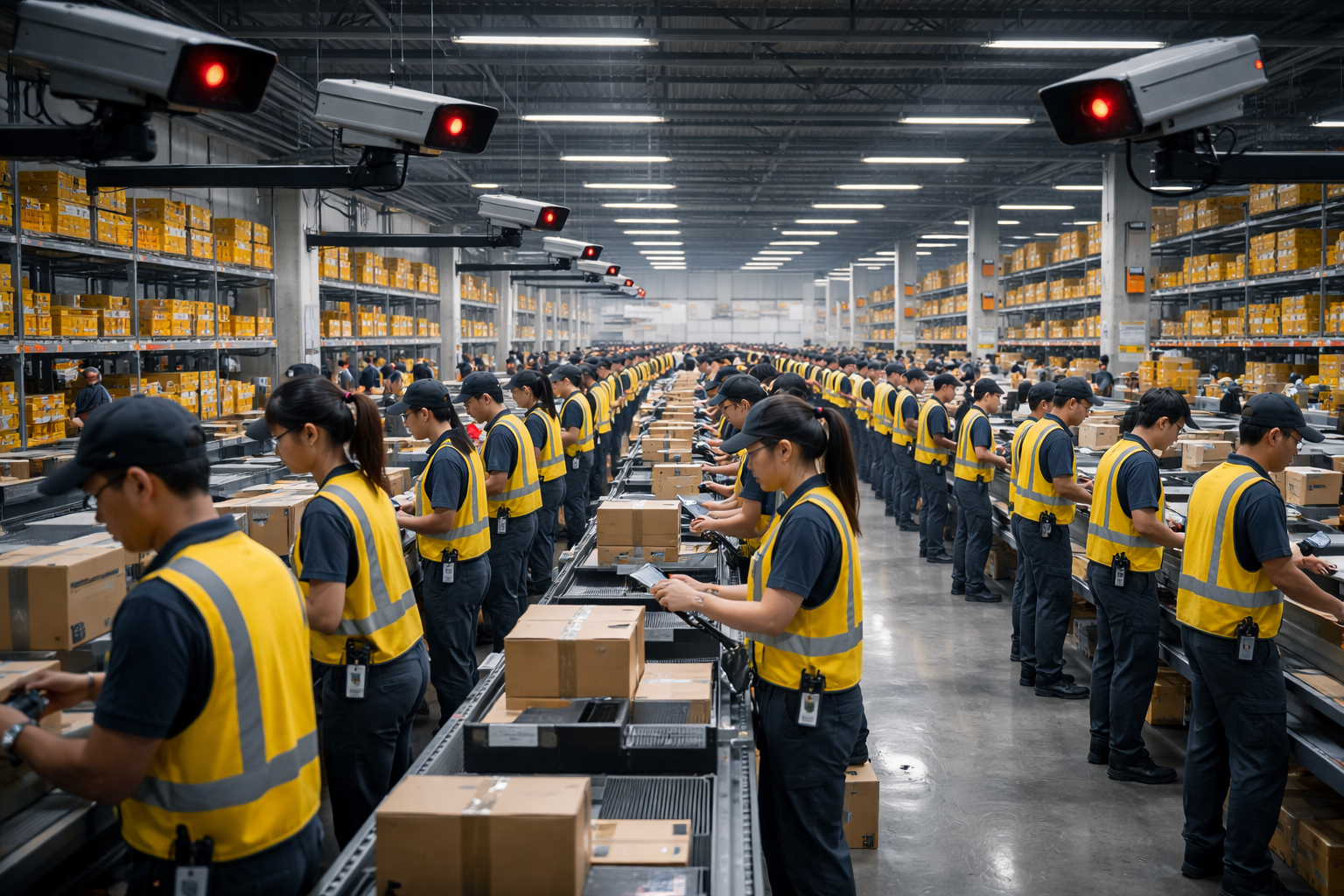
There has been an increasing trend in many workplaces for management to exert greater control over how work is done by front-line staff. One prominent example of this can be seen among certain logistics distribution centre workers in the United States. These workers are told in exacting specificity what to do, when to do it, how to do it, and in what order. Move box 516 from location A to location B, and then box 632 from location J to location Y. This must be done within 45 seconds. Completion of these tasks is monitored throughout by cameras and geo-location software. Bathroom breaks are strictly timed, and the productivity impact is assessed. All of this is to ensure that the workers are ‘accountable’.
The desire for control doesn’t usually come from a bad place. It often arises out of efforts to ensure quality or safety standards, and a proliferation of procedures to establish systems to achieve these outcomes. There are important benefits to be obtained from standardisation, systems thinking and consistency. Indeed, in larger organisations, the absence of systems would create chaos, dysfunction, and confusion.
However, this increased control comes with a cost; the abdication of personal ownership and responsibility. People become accustomed to simply “doing as they're told”. The ultimate outcomes of their efforts, the final delivery of the product or service, are not their concern. This is not because people don’t care about their work, but because they have no freedom of action in which to take initiative. Their task is simply to follow the procedure as directed, step by step. They take no responsibility, because no responsibility has been given to them.
One might object and say, well they do have responsibility, they are responsible for following the rules, and should be accountable if they do not. This is true, but mere compliance with rules does not constitute genuine ownership and responsibility. It does not generate the inspiration that comes with purpose. They can be held accountable by others, but they have little accountability themselves to own. If we want people to take ownership and responsibility, if we want them to hold accountability themselves rather than be held accountable by others, we need to give them some autonomy over their work. If a person has influence and control over how their work is done, they have decisions to make, judgment to exercise based on their experience, knowledge and training. This might be around the order in which to complete tasks, resource allocation, what outcomes should be prioritised over others at any given time and so on. By being given responsibility and ownership for making those decisions, accountability flows naturally from those choices, because it is their decisions, they aren’t merely following a script that dictates words and actions that are not truly their own.
Let’s use the example of airline pilots to illustrate what I mean. Airline pilots work in a tightly regulated, highly procedural environment. They have checklists, comprehensive company operating procedures, and prescriptive regulations to follow. On an average day-to-day flight, much of what they do will be done “by the book”. Nevertheless, despite that environment, they are given tremendous responsibility and ownership by the airline. It is recognised that pilots are the ones on the scene; they are the ones who are required to undertake the task of getting the aircraft safely from A to B. Therefore, the final decision about how much fuel to take is in the hands of the pilots. If they are unhappy with the state of repair of the aircraft, they can choose not to fly it. If the weather at the destination is poor, the pilots will decide whether to attempt a landing or to divert to an alternative airport with better weather.
These are underpinned by Just Culture frameworks that don’t punish individuals for decisions and actions taken that were commensurate with their experience and training, even if those decisions and actions were not optimal. These frameworks recognise that a bad outcome does not of itself mean a decision was bad (consequence bias), and bad decisions can still result in good outcomes. Therefore, they look at the quality of decisions and actions, not purely outcomes. It also recognises that human beings are fallible and will make errors from time to time, even when trying their best. This gives airline pilots the confidence that, as long as they are trying their best, they can make decisions knowing they won’t be second-guessed by armchair pilots after the fact, who know the outcome and have plenty of stress-free time and space to consider the best choice. In the absence of clear evidence of malicious intent or gross recklessness, post-event reviews are focused on individual and organisational learning, not blame and punishment.
In short, the pilots have significant influence and control over the conduct of the flight. They have been given a high degree of responsibility and ownership. Consequently, the vast majority of airline pilots feel that responsibility very keenly and hold themselves accountable for high standards of performance. They know that the decisions they make are safety-critical for themselves, their crew and their passengers. Airline pilots do not need to be exhorted to take responsibility and ownership; it is given to them by the control and influence they have over their work.
However, it is vitally important to note that this responsibility and ownership are not just handed over in a vacuum. Airline pilots are supported with significant training and resources to support high-quality decision-making. This includes technical training, decision-making, communication and teamwork training, briefing templates, engineering and operations support from the ground, etc.

The airline pilot example illustrates three things.
First, that control and influence can be given even in highly regulated and procedural environments.
Second, to function well, people exercising that control and influence must be supported with training, resources and backup to make good decisions.
Third, that autonomy must be underpinned by a Just Culture that reviews those decisions and actions fairly, uncontaminated by consequence bias or unrealistic expectations of human perfection.
Wherever you want people to take greater ownership and responsibility is where you need to give some degree of autonomy. If, for example, you want more individual safety ownership, they need to be given some level of control or influence over safety as it pertains to their individual work.
So how can we provide people with more autonomy in their work, to give them the ability to take on ownership and responsibility? There are three primary levels at which this could be done.
Individual autonomy (control)
You give individual people a zone of freedom of action over how to do their work. This is, of course, not unlimited but bounded by procedures, policies, etc. But within those bounds, they are responsible for exercising their judgment.
Team autonomy (part control, part influence)
Here, the zone of freedom of action is situated within the group. The team as a whole has control, and each member of the team has influence over the decisions the team takes.
High levels of reporting feedback and action taken (influence)
In some circumstances, giving meaningful freedom of action at an individual or team level is impractical or undesirable. Off the top of my head, a worker on an assembly line comes to mind. There is not much scope for much autonomy here, at least as far as the actual work task itself goes, and it probably wouldn’t be desirable in any case. However, there are still ways to give influence over how work is done through robust reporting systems. These systems need to provide timely feedback and lead to meaningful change. When people report a procedure is problematic, and the organisation looks at it and works with those people to change the procedure so that it works better, it is incredibly powerful. It demonstrates to people that they can have a real impact on how the organisation does its work. It means the rules aren’t just something that comes from above, they just blindly follow, rather they are something they have a role in creating, something that serves both the organisation and themselves. A tool to help everyone to do a good job, progress the purpose of the organisation, and to go home safe and healthy at the end of the day.
Want your people to take more ownership and responsibility, to be more accountable? Give them some ownership and responsibility to exercise, provide the necessary support and protection to do so, and watch them take on accountability themselves. Because now their actions and decisions aren’t just about mere compliance, they have purpose.
Was this post useful or interesting for you?
You can drop a comment on this post on LinkedIn, and if you think it would be helpful for others, please consider sharing it.
DISCLAIMER: This blog provides general information only, and is not intended as advice (legal or otherwise) specific to your circumstances. Please contact us if you have any particular questions.